Transcutan

Reframing the dialysis connection

I led the design direction for a cassette-based concept, using patient and nurse validation to shift the team from reusable complexity toward a simpler single-use system.

The image featured at the top of the about us page #1

Project Overview

Role: Product Design Lead
Duration: 2 years
Scope: Medtech · Usability validation · Product direction
Team: 5 Engineers, Product Manager, Product Specialist, QA
Outcome: Shift toward single-use cassette system

Problem

A critical connection repeated several times per day

Peritoneal dialysis requires patients to connect and disconnect their dialysis system several times per day. Each repeated interaction adds cognitive load, handling steps, and hygiene risk around the catheter connection.

Core idea

Creating a cleaner body interface

The core idea was to replace the exposed tube-based interface on the stomach with a cleaner port. This created the foundation for a cassette-based system that could guide connection and disconnection with less direct handling.

Starting point

An early concept was already in place

The team had already explored a reusable device to guide the connection sequence. My role was to evaluate it through research and usability testing, then lead its evolution toward a simpler solution.

Early reusable guidance device concept

Research

Research revealed where risk appeared

01

Cleaning created uncertainty

The reusable concept introduced concerns around hygiene and maintenance.

02

Key tasks were difficult

Testing revealed confusion around critical connection steps.

03

Simplicity mattered most

The findings pushed the concept toward fewer steps and less cleaning.

Validation

What testing revealed

Throughout the project, we tested evolving concepts with nurses and patients to uncover confusion, hygiene concerns and maintenance burden. Their feedback showed what needed to change.

01

Nurse feedback

Cleaning the reusable component created hygiene uncertainty.

02

Patient testing

Users struggled with key steps in the connection process.

03 — Outcome

Design decision

The concept shifted toward a simpler single-use cassette system.

Concept evolution

From reusable complexity to single-use clarity

The concept evolved through three directions. Each step reduced interaction complexity, cleaning demands, and contamination risk while moving closer to a safer home-treatment solution.

01 — STARTING POINT

Reusable control tower

The first concept guided every connection step through one reusable device. It offered control, but added buttons, handling, maintenance, and a demanding cleaning routine.
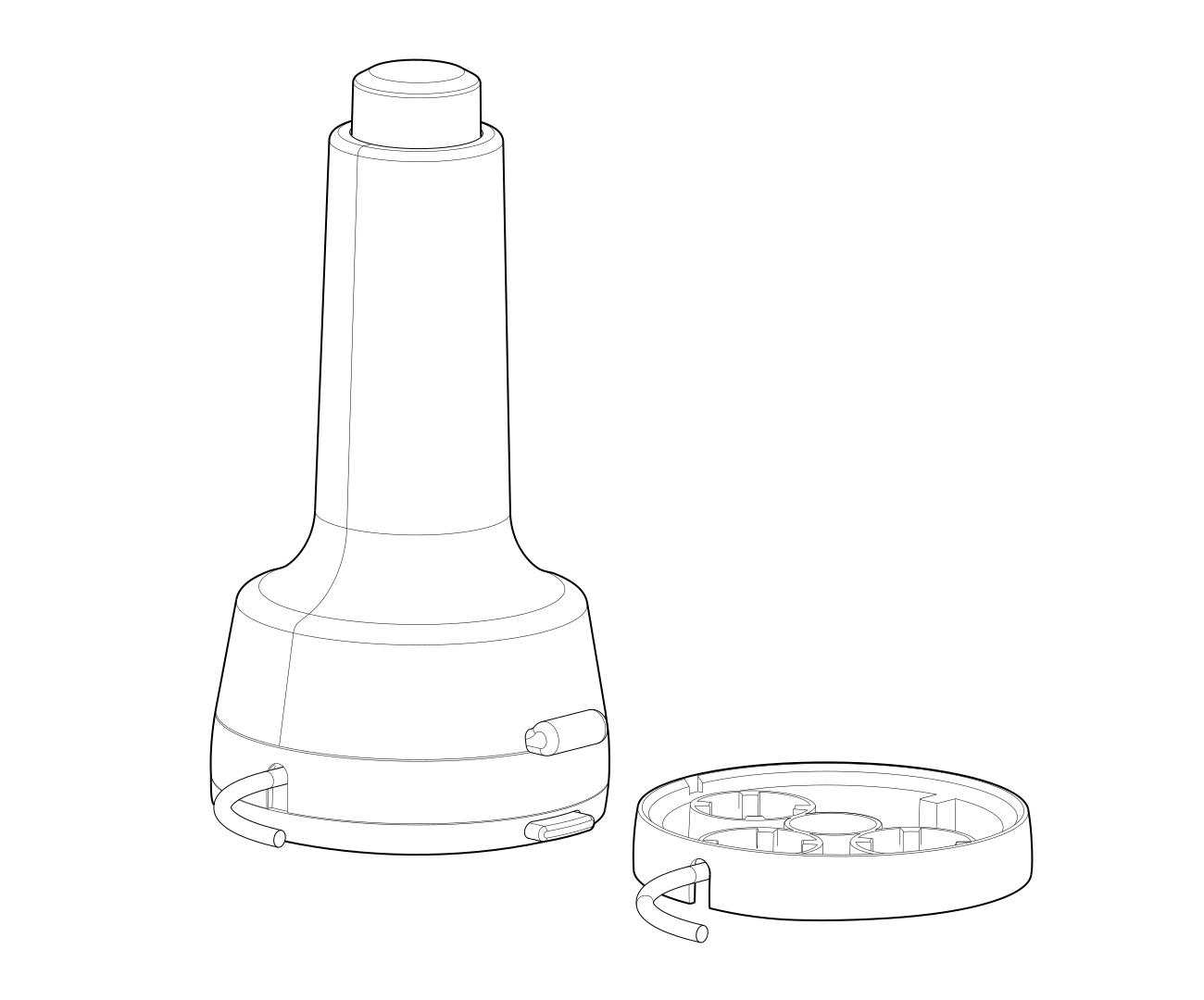
02 — SIMPLIFIED DIRECTION

A smaller reusable cassette

The second direction reduced controls and separated the housing from the treatment interface. The interaction became easier to understand, but repeated cleaning remained unresolved.

03 — FINAL DIRECTION

Single-use clarity

The final direction made the cassette itself disposable. A focused two-button sequence reduced handling around the critical connection point and removed the need to clean a reusable treatment component.

How it works

A guided lid exchange around the critical connection point

The cassette system guides the patient through connection and disconnection by replacing the port lid in a controlled sequence, reducing direct handling around the critical connection point.

Start treatment

01. Attach treatment cassette

02. Press orange

03. Move forward

04. Press white

05. Catheter connected

DIALYSIS ONGOING

DIALYSIS ONGOING

DIALYSIS ONGOING

DIALYSIS ONGOING

DIALYSIS ONGOING

End treatment

01. Attach closure cassette

02. Press orange

03. Move forward

04. Press white

05. Port closed

Single-use cassette system

Single-use cassette system

A simpler interaction model designed around safety and everyday use.

01

Less cleaning

No reusable tool to clean between treatments.

02

Less handling

The cassette guides interaction around the port.

03

Clearer interaction

The product uses a simple button sequence to support correct use.

Roadmap

A phased path from add-on to new standard connection

To make the concept commercially realistic, I presented a phased roadmap showing how the product could move from a compatible add-on to a fully integrated connection system.

Now

01

02

03

FUTURE

01

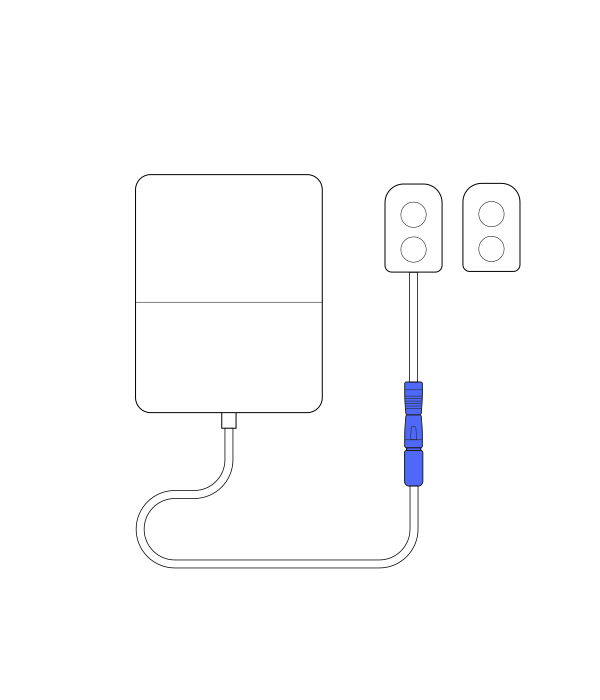
Compatible add-on

Faster time to market
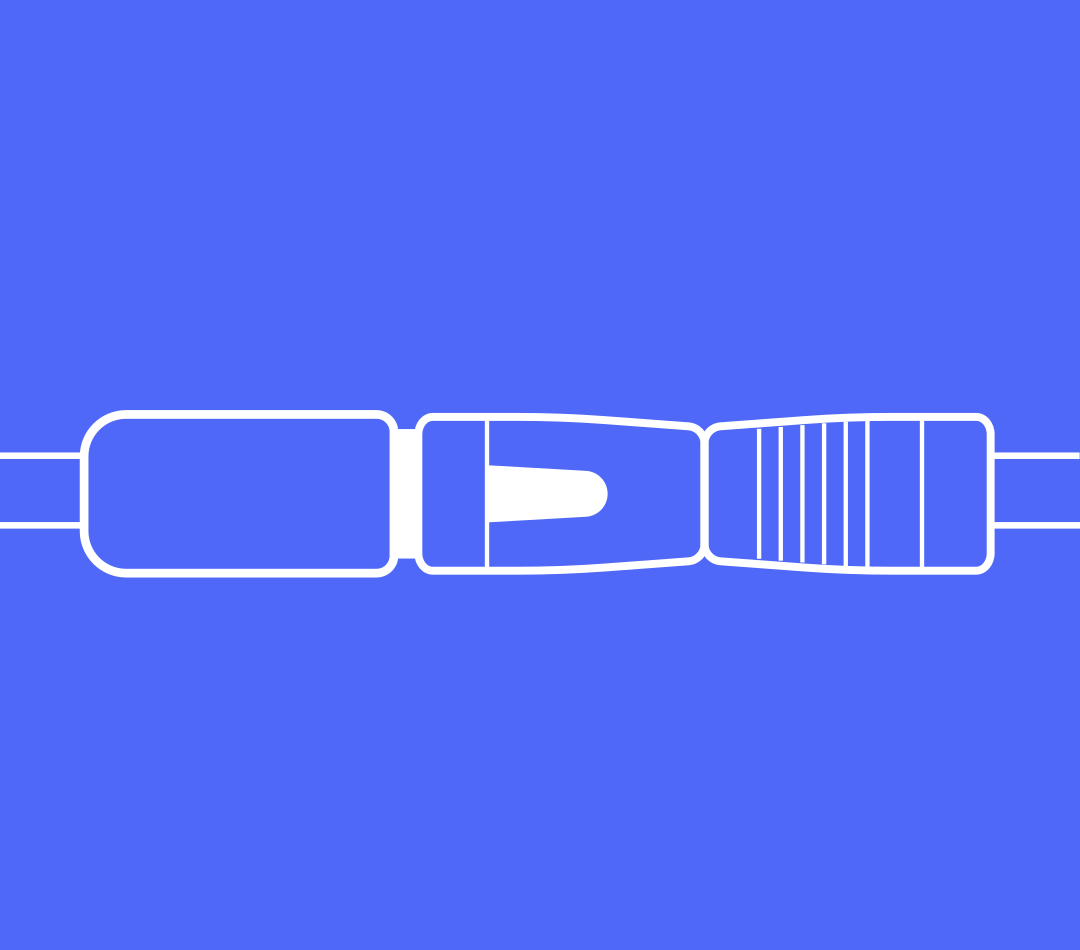
Works with today’s dialysis setup and lowers adoption risk.
02

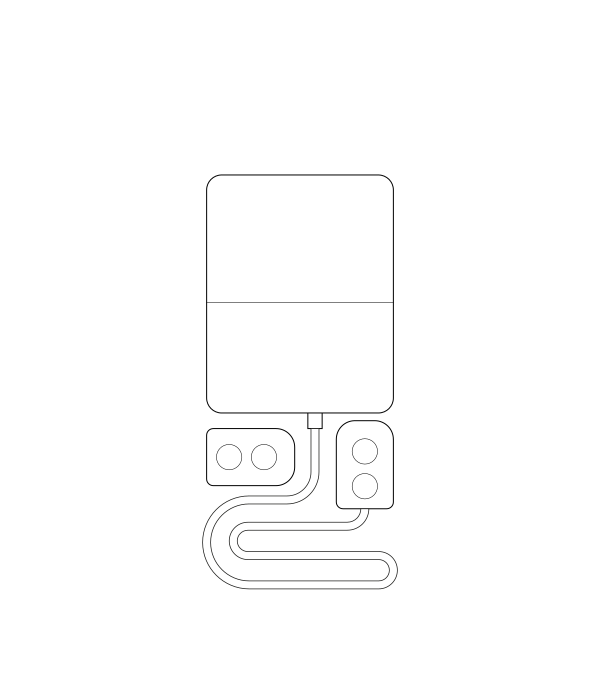
Integrated system

Lower adoption friction
Improves the experience while still fitting existing infrastructure.
03

New standard connection

Long-term product opportunity
Replaces the old connection over time and opens up licensing potential.

Outcome

A clearer and safer product direction

The project shifted from a complex reusable tool toward a simpler single-use cassette direction, with a clearer interaction model and stronger alignment between usability, safety, and business opportunity.

01

Single-use cassette

A simpler concept replaced the complex reusable tool.

02

Clearer interaction

A guided, predictable model around the critical connection.

03

Aligned direction

Usability, safety and business opportunity pulling the same way.

Key learning

“Evidence alone is rarely enough. To influence direction, arguments need to be adapted to the audience and delivered at the right moment.”

“Evidence alone is rarely enough. To influence direction, arguments need to be adapted to the audience and delivered at the right moment.”

End of case study

Thanks for reading